The jungle
The jungle is the governing metaphor of Arthur Miller's Death of a Salesman, a dark, amoral space that stands in stark opposition to the sunny, well-liked surface of the American Dream. It is not a literal place but a symbolic arena where the only law is the survival of the fittest, and where success is measured not by character or community but by raw acquisition. The metaphor is introduced and personified by Uncle Ben, Willy Loman's older brother, who represents a version of success that Willy both envies and fears. Ben's repeated claim—"When I walked into the jungle, I was seventeen. When I walked out I was twenty-one. And, by God, I was rich!"—becomes a haunting refrain that Willy cannot escape, a promise of wealth and power that seems to mock his own failed efforts.
The Jungle as Ben's Philosophy
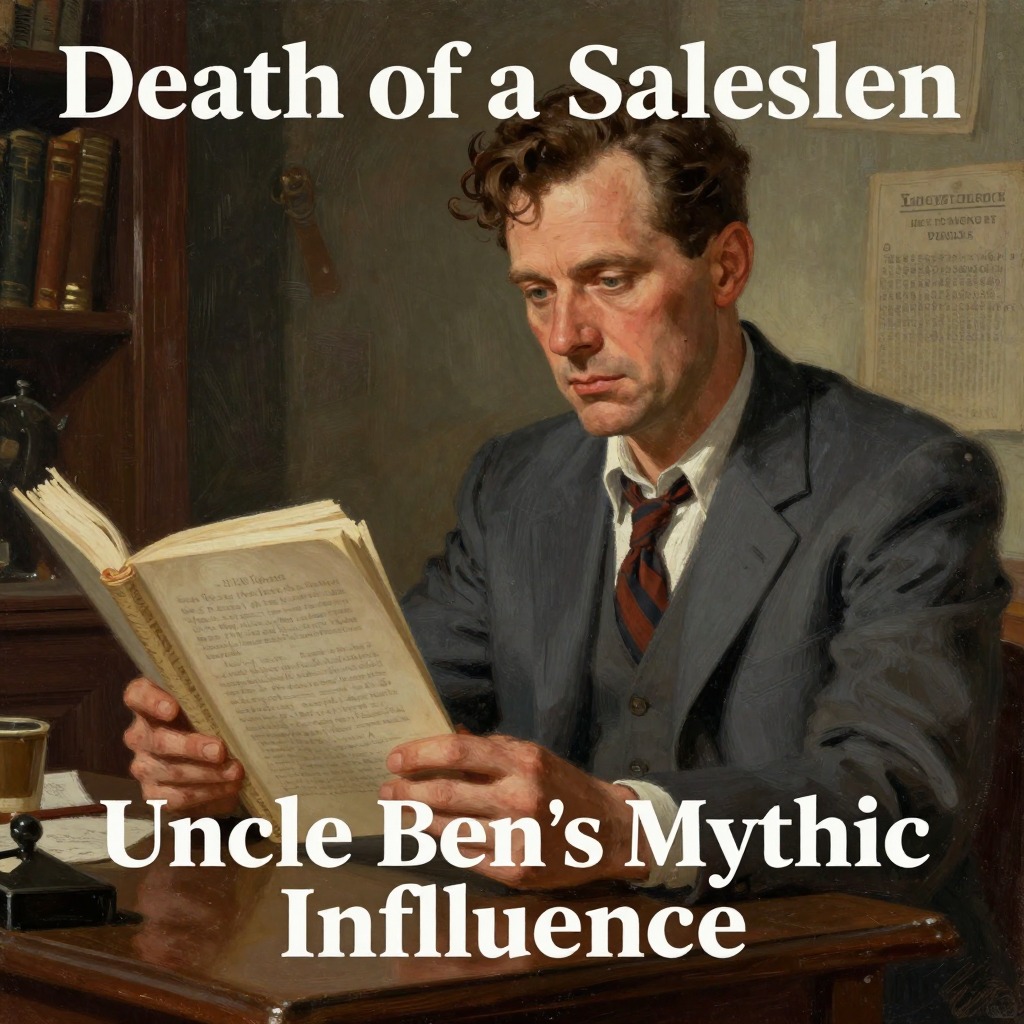
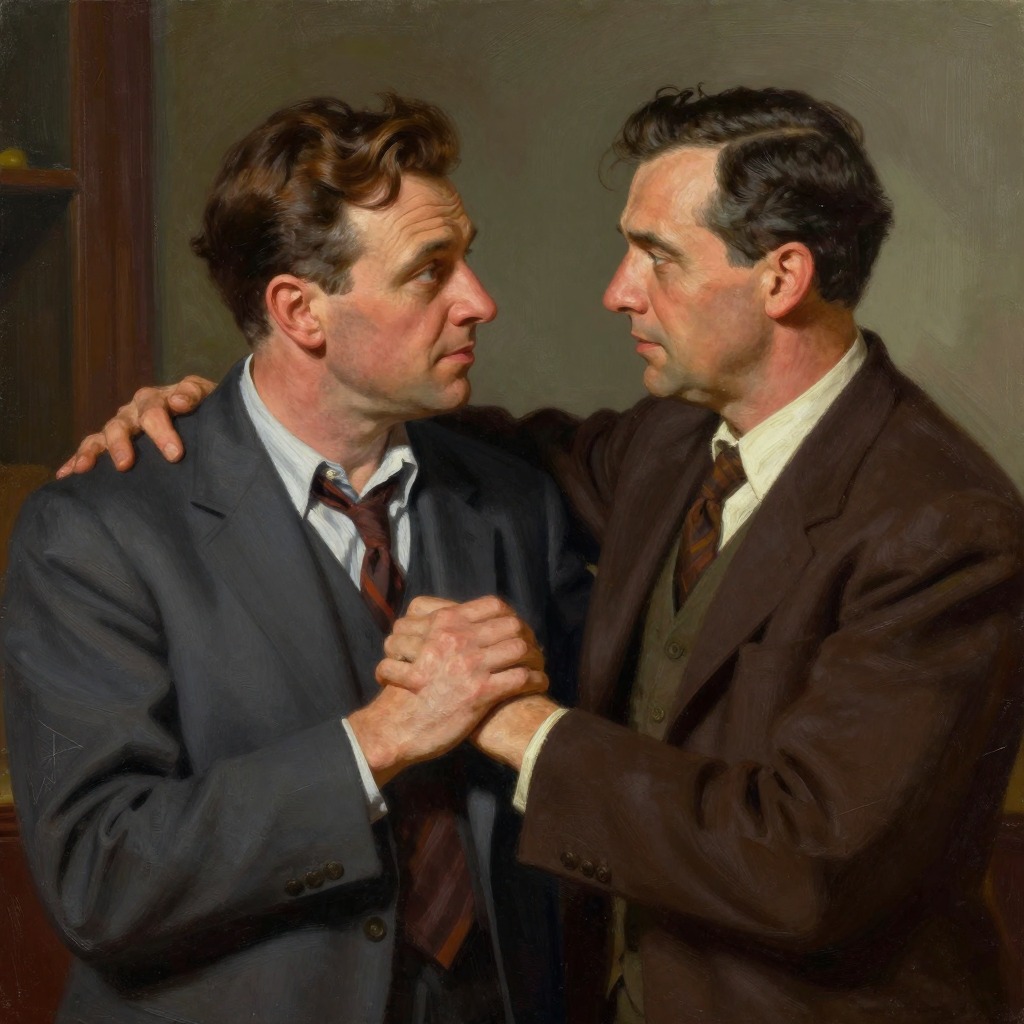
Uncle Ben is the jungle's prophet. He appears to Willy at moments of crisis, always carrying a valise and umbrella, always in a hurry, always certain of his destiny. His philosophy is distilled into a single brutal lesson: "Never fight fair with a stranger, boy. You'll never get out of the jungle that way." This advice, delivered while sparring with a young Biff, encapsulates the jungle's moral code—a code that rejects fairness, sportsmanship, and human decency in favor of cunning and ruthlessness. Ben's own life story is the parable of the jungle: he walked into it as a teenager and emerged a rich man, having discovered diamond mines in Africa after a mistaken journey south instead of to Alaska. His success is presented as a matter of will and audacity, not of hard work or virtue. Willy, who stayed behind, is left to wonder what might have been, and the jungle metaphor becomes the measure of his failure.
The Jungle as Temptation and Threat
For Willy, the jungle is both a temptation and a threat. He recalls with regret that he did not go to Alaska with Ben, a decision he believes cost him his chance at greatness. "The world is an oyster, but you don't crack it open on a mattress!" he exclaims, contrasting his own sedentary, commission-based life with Ben's adventurous conquest. Yet the jungle is also a place of danger. When Ben reappears in Act Two, after Willy has been fired by Howard Wagner, he offers Willy a new proposition: a job managing timberland in Alaska. But the offer is really a temptation to abandon everything—family, home, the fragile hope of reconciliation with Biff—for the promise of wealth. Willy hesitates, and Ben's voice grows more insistent: "The jungle is dark but full of diamonds." The phrase becomes a mantra, repeated with increasing urgency as Willy's mental state deteriorates. The diamonds are the ultimate prize, but the jungle is dark, and the price of entry may be one's soul.
The Jungle and Willy's Final Decision
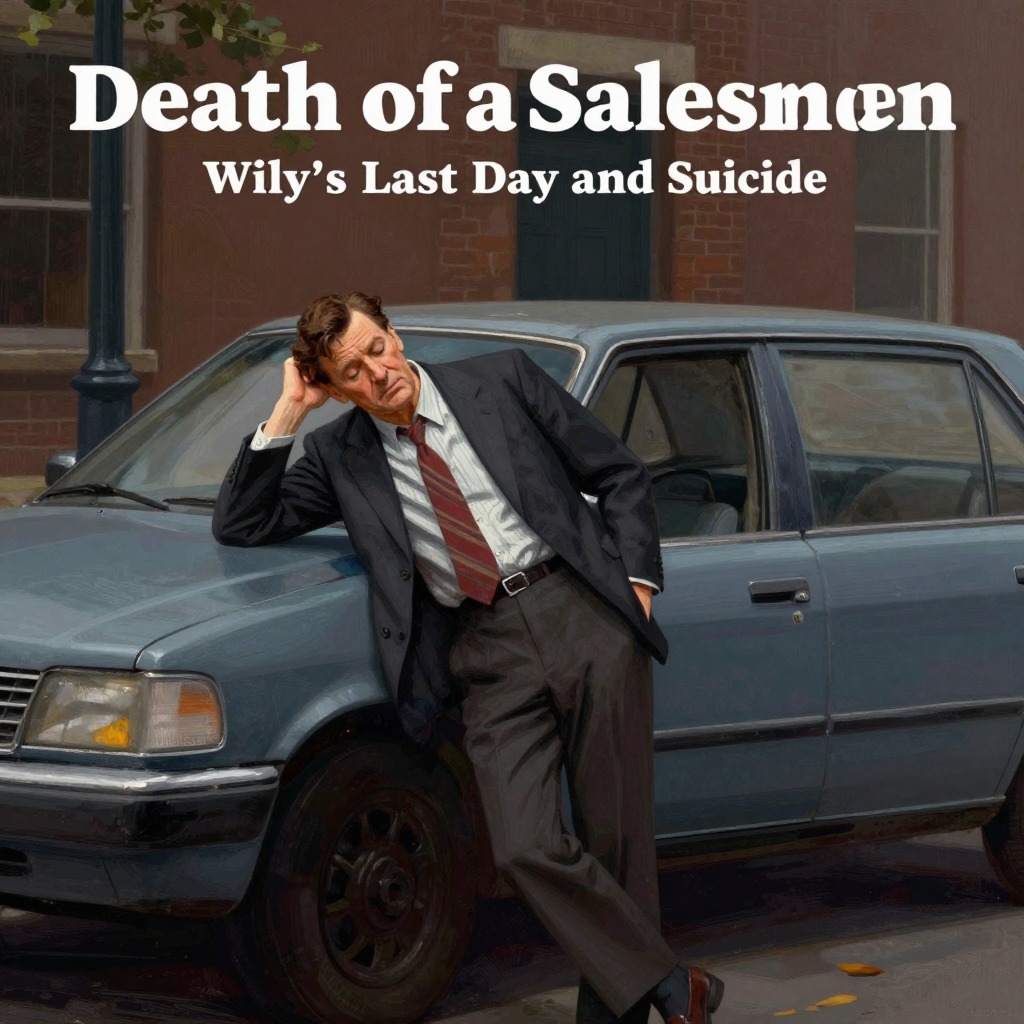
In the play's final scene, the jungle metaphor directly informs Willy's decision to kill himself for the insurance money. Ben, now a spectral presence, argues the proposition: "It's called a cowardly thing, William." But Willy counters, "Does it take more guts to stand here the rest of my life ringing up a zero?" Ben yields, acknowledging that twenty thousand dollars is "something one can feel with the hand, it is there." Willy sees the insurance payout as a diamond—"shining in the dark, hard and rough, that I can pick up and touch in my hand." He imagines the funeral as a massive event that will finally prove his worth to Biff, who will be "thunderstruck" by the crowd of mourners. The jungle logic has fully possessed him: he will walk into the darkness of death and emerge, in his own mind, a rich man, having traded his life for the diamond of his son's future. Ben's final words—"The jungle is dark but full of diamonds"—are the last thing Willy hears before he rushes off to his car and his death.
The Jungle as Critique of the American Dream
The jungle metaphor is Miller's most powerful critique of the American Dream's dark underside. It exposes the contradiction at the heart of Willy's belief system: he wants to be well-liked, to be a man of personality and contacts, but the jungle teaches that success belongs to those who are ruthless, not those who are loved. Ben, who embodies the jungle, is utterly indifferent to human connection; he has no time for sentiment, no patience for Willy's struggles. He is the pure product of a system that rewards aggression and punishes weakness. Willy, who cannot be ruthless, is left to borrow money from Charley and pretend it is his pay. The jungle, then, is not a place Willy can enter and survive; it is the system that has already consumed him, leaving him a hollow shell of a man who has bought the dream but cannot live it. In the end, the jungle is not a path to riches but a grave, and Willy's final act is not a conquest but a surrender to its logic.